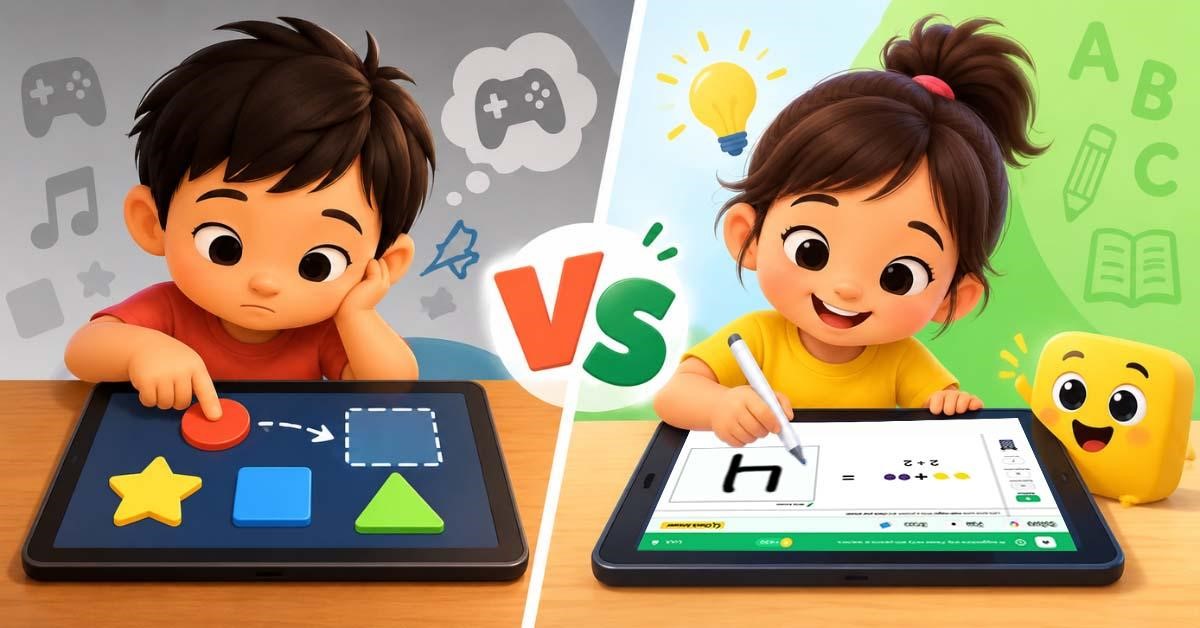
Today, many young kids can swipe a phone before they can hold a pencil properly. Without assistance, a three-year-old can launch an app, open a video, and tap a game. It appears intelligent, and in certain respects it is. One thing, though, is important: writing is not the same as tapping and dragging.
I'll tell you why.
Writing Is More Than Making Letters
When a child writes the letter "A" on paper, a lot is happening. The eyes see the shape. The brain remembers how it looks. The fingers move in the right direction, with the right pressure. All of this together builds a strong connection between the brain and the hand.
On a screen, a child just touches or drags. The finger moves, but the small muscles of the hand do not work the same way. A pencil needs grip, control, and balance. A screen needs only a touch.
What Happens When Children Only Tap and Drag
Screens are not bad. But if a child only taps and drags every day, a few problems can come up.
- Weak pencil grip. Many teachers say children now come to school with weak fingers. They get tired quickly while writing.
- Messy or slow handwriting. Without enough practice, letters look uneven, and writing takes a long time.
- Trouble remembering letters. Studies suggest that children remember letters better when they write them by hand than when they only see or tap them.
- Less patience. Screen games give quick rewards. Writing needs slow, careful work, and that habit needs to be built early.
Writing Helps Reading Too
Many parents are unaware of this. Children get better at reading letters when they practice writing them. Writing causes the brain to pick up on minute distinctions, such as the differences between "b" and "d" or the ways that "p" and "q" face each other.
Thus, practicing handwriting is more than just a school assignment. From nursery through LKG, UKG, and eventually primary school, it supports the child's entire educational journey.
But Should We Throw Away the Tablet?
No, not at all. When used properly, digital learning can be quite beneficial. A good app can entertain a child with colors and sounds, demonstrate the proper stroke order, and hold their attention for a short while. It can also be a useful guide for working parents.
Balance is the true solution. Learn about and become enthusiastic about letters by using the screen. Next, take the child to a notebook or slate so they can use a real pencil to write the same letters. The pencil leads the child inside after the app opens the door.
Simple Ways to Build Writing Habits at Home
You don't need special tools. Here are some easy ideas:
- Start with play. Let your child draw lines, circles, and waves in sand, flour or on a slate. This builds finger strength before real writing.
- Use fat crayons and pencils. They are easier for small hands to hold.
- Keep sessions short. Ten minutes of happy writing is better than thirty minutes of crying.
- Let them write their own name. Children feel proud when they write something that belongs to them.
- Praise the effort. Don't say "this is wrong." Say "Good try, let's do it once more together."
- Mix screen and paper. After your child learns a letter in an app, ask them to write it in a notebook the same day.
How Effling Kids Fits In
We at Effling Kids believe that learning should be simple and fun for young children. With the app's toddler, preschool, and kindergarten levels, every child can start where they are. Parents are also given control and a clear review so they can see how their child is actually learning. For the letters or words they want their child to focus on, they can also add customized notes.
Paper and pencil will not be replaced. It is meant to make learning fun for children and provide parents with the self-assurance to guide them at home.
A Small Thing That Makes a Big Difference
Regular writing helps a child develop more than just good handwriting. They increase patience, focus, and self-assurance. Long after the notebook is closed, these things remain with them.
Therefore, it's acceptable if your child is occupied with tapping and dragging on a screen the next time. Just allow time for the pencil as well. We often underestimate the benefits of writing for a few minutes each day.
Every great writer, after all, began with a single shaky sentence.