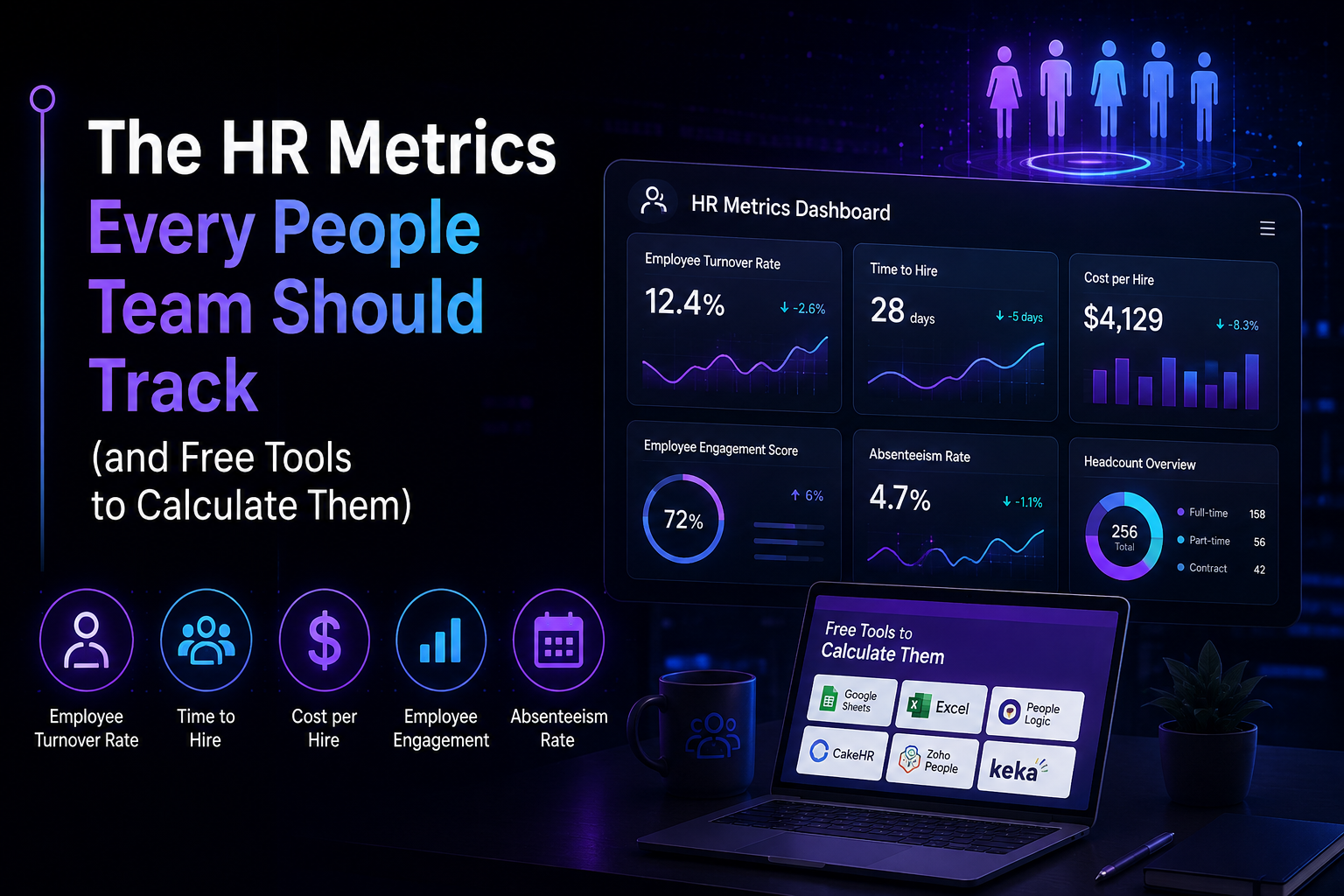
A few months ago, a CFO asked one of my clients a 40-person logistics startup to "prove HR's impact" before the next budget cycle. Not in a hostile way. He just wanted numbers. She had stories, she had gut feel, she had a stack of exit interviews nobody had turned into anything. What she didn't have was a single slide with HR metrics on it.
That moment is happening in more People Ops offices right now than most of us admit out loud. Today, "trust me, engagement is better" doesn't survive a budget meeting. You need the numbers, and you need to know which ones actually matter.
Why Metrics-Driven HR Matters Now
HR used to get a pass. You handled onboarding, ran payroll, fixed conflicts, and nobody in finance asked to see your dashboard. That pass has expired.
Leadership teams now sit HR next to marketing and sales in the same forecasting conversations. They want cost per hire the way they want customer acquisition cost. They want turnover trends the way they want churn numbers. If you can't produce HR metrics on demand, you get read as reactive rather than strategic and that perception is hard to shake once it sticks.
I've watched this shift firsthand over the past few years. The HR leads who got seats at the strategy table weren't necessarily the most experienced ones. They were the ones who walked in with a number and a one-line explanation of why it mattered. That's the whole game now.
The Core HR Metrics Every Team Should Track
Employee Turnover Rate
This is the one everyone tracks and almost nobody tracks correctly. Total exits divided by average headcount, times 100 simple on paper. But most teams lump voluntary and involuntary turnover together, which hides the real story.
A mid-size SaaS company I worked with had a turnover rate that looked "fine" on the surface. Split it into voluntary versus involuntary, though, and 80% of the departures were regretted resignations from one team. That's a retention problem, not a performance problem, and the blended number had been masking it for two quarters.
Cost Per Hire
Add up your internal and external recruiting costs job ads, agency fees, referral bonuses, recruiter time and divide by hires made. It sounds like a finance exercise, but it's really a mirror held up to your recruiting process.
Since cost calculations often involve multiple expense categories, using an HR calculator can help teams avoid missing important factors and get a more accurate view of their hiring investment.
Where teams get this wrong: they only count the obvious line items and skip internal time cost. A hiring manager spending six hours a week screening resumes for a role that sat open for two months is a real cost, even if it never shows up on an invoice.
Time to Hire
Time to hire measures the number of days from when a candidate enters the recruitment process to when they accept an offer. This metric has a direct connection to both candidate experience and business speed, a slow hiring process can cause companies to lose qualified candidates to faster competitors.
A dedicated time-to-hire calculator can help HR teams measure recruitment efficiency, compare hiring performance over time, and identify areas where the process may be slowing down.
I've seen companies proudly report "time to fill" and call it time to hire. They're not the same metric. Time to fill starts when the requisition is approved, while time to hire starts when the candidate enters the hiring process. Mixing them up can make recruitment performance appear better than it actually is, which helps nobody.
Employee Engagement Score
Usually pulled from a pulse survey, scored on some version of a 1-5 or 1-100 scale. The mistake here isn't in the measuring it's in the follow-through. Teams run the survey, get the score, and then do nothing visible with it.
Engagement scores only mean something when people can see the loop close. Score drops, team hears why, team sees a change, score gets re-measured. Skip that loop and the next survey gets a worse response rate, guaranteed. I've had managers tell me flat out they stopped filling out surveys because "nothing ever changes" and once that sentiment spreads, the data itself becomes unreliable.
Revenue Per Employee
Total revenue divided by headcount. Leadership loves this one because it's a proxy for organizational efficiency are you growing revenue faster than you're growing headcount, or just adding people to hit the same numbers?
HR teams tend to ignore this metric because it feels like a finance number. It isn't. It's one of the fastest ways to justify or challenge a hiring plan in front of a CFO who thinks in ratios. Track it alongside headcount growth over a few quarters and you'll usually spot the pattern before finance does, which is exactly the kind of thing that earns HR a seat at the table instead of an invitation after the decision's already made.
Offer Acceptance Rate
Offers accepted divided by offers made. A dip here is almost always a compensation or process signal before it's a candidate signal worth watching quarter over quarter, not just after a bad month.
Why Generic HR Calculators Often Fall Short
Many HR teams still rely on spreadsheets or generic calculators to measure workforce performance. While these methods may work for basic calculations, they often become difficult to manage as organizations grow.
A useful HR tool should help professionals quickly analyze important workforce metrics such as hiring costs, employee turnover, compensation insights, engagement trends, and workforce efficiency without spending hours creating formulas manually.
For modern People teams, accessible HR calculators can simplify decision-making by turning complex workforce data into practical insights that support better planning and strategy.
Using HR Tools to Make Metrics-Based Decisions
Platforms like NextInHR provide free HR tools that help professionals calculate and understand important workforce metrics, including recruitment costs, employee trends, compensation insights, engagement measurements, and other HR indicators.
These tools are designed to help HR professionals quickly get answers without building complicated spreadsheets from scratch. For small businesses, growing HR teams, and People Operations professionals, accessible calculators can make it easier to support decisions with data.
Before Your Next Leadership Review
Make sure you can answer these without opening five spreadsheets:
- What's our voluntary versus involuntary turnover rate, split out?
- What did our last five hires actually cost, internal time included?
- Where is our time to hire trending against last quarter?
- What did we do with the last engagement survey results?
HR metrics aren't about creating endless dashboards or tracking every possible number. They're about walking into that budget meeting with three numbers you actually understand, instead of a story you hope lands. Pick the ones that map to what your leadership already cares about, and track them consistently enough that a bad quarter shows up before it becomes a bad year.
SEO Title
HR Metrics: Turn Workforce Data Into Better Decisions
Meta Description
Learn the HR metrics every People team should track, including turnover, cost per hire, engagement, and how free HR tools simplify calculations.
Suggested Categories/Tags
HR Tech, HR Metrics, People Analytics, HR Tools for Small Business