ULIPs are insurance cum investment plans that allow an investor to meet long-term financial commitments, along with providing life insurance coverage. A part of the premium amount is allocated towards the funds opted for, & the remaining is allocated towards life insurance coverage. It also provides an option to switch between the funds with your changing requirements & upcoming milestones you are about to reach. The funds invested generally cannot be withdrawn in the lock-in period, i.e. 5 years, & a surrender fee is charged in case funds are partially withdrawn before 4 years.
In case of a sudden demise of the policyholder, the nominees will get the death benefit or the fund value, whichever is higher. In case the policyholder survives the plan, the policyholder will receive the fund value that would have been accumulated, depending on the fund's performance.
One should choose ULIP if:
- You want dual benefits of insurance & investments.
- You are willing to take risks for higher returns.
- You are willing to invest in market-linked securities.
- You have medium to long-term financial objectives.
How Does ULIP Work?
Let us now see how ULIP works:
- Making Payment:
To start with a ULIP, an investor is required to make a payment towards the plan, either regularly or in a lump sum.
- Allocation of Investments:
According to the risk tolerance level, allocate the premium amount towards debt funds, equity funds, or balanced funds.
- Fund Returns:
The performance of funds decides how much return ULIP will provide you with. Equity funds provide higher returns but come with higher risk.
- Ability to Switch Funds:
ULIPS allow switching between the funds in case the fund is underperforming, depending on the market situation.
- Life Insurance Cover:
ULIPs include life insurance coverage, which offers financial security in case of the policyholder’s sudden demise, providing them with mental peace.
- Partial Withdrawals:
ULIP funds allow withdrawal of funds once the lock-in period of 5 years is met, providing the policyholder with flexibility in the plan.
- Maturity Benefit:
A maturity benefit in terms of sum assured will be received in case the policyholder survives the plan.
- Tax Benefits:
The premium amount paid towards the plan is eligible for a tax deduction u/s 80C of the Income Tax Act, 1961. The maturity proceeds received will be exempt from tax u/s 10(10D) of the Income Tax Act, 1961.
- Customisable Plan:
In this way, a combination of insurance & investment helps both in risk management & wealth creation. This allows customising the plan depending on the market scenario & financial objectives of the policyholder.
- Death Benefit:
In case the policyholder dies at any time during the policy tenure, the death benefit that will be received by the nominees will be the higher of the two:
- i) Sum Assured or Total Fund Value (as on the date of death)
- ii) Sum Assured plus Total Fund Value
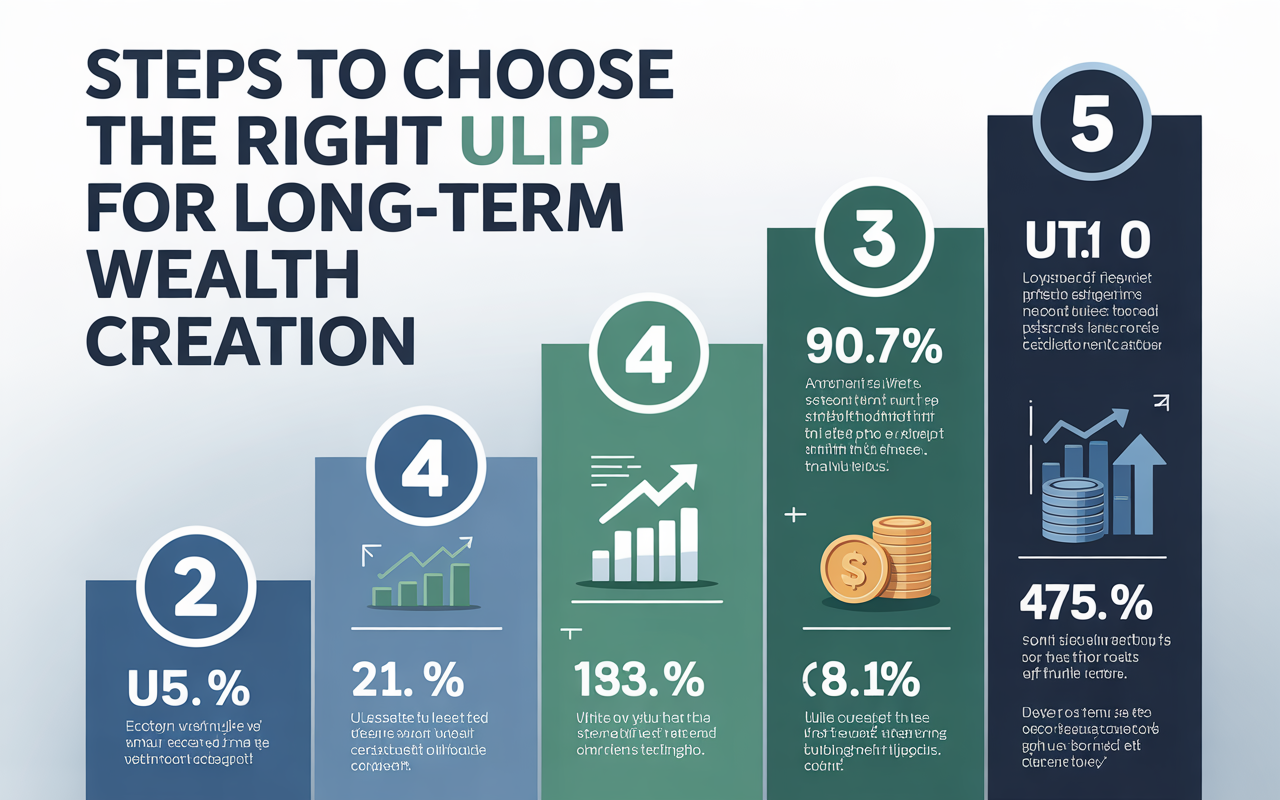
Steps to Choose the Right ULIP
Now that we understand the concept of what is ULIP, let us know the steps to choose an appropriate ULIP:
Step 1: Research Well to Know About ULIPs
Conduct proper research about the ULIPs to make an informed decision on how to make the most of your purchase of a ULIP.
Step 2: Determine Your Risk Profile
Assess the risk tolerance level to ensure an allocation of the premium amount in the appropriate funds. In case an investor’s profile is low-risk, the funds can be allocated towards debt funds. On the other h&, a larger amount can be deposited in equity funds to get high returns.
Step 3: Compare Policies from Different Insurers
As there are different ULIP plans available in the market, they may vary from one another. Hence, to make an informed decision, it becomes mandatory to compare them.
Step 4: Check Out the Associated Charges
As we know, there are many different charges associated with ULIPs, which include mortality charges, fund management charges, fund switching charges, partial withdrawal charges, administrative charges, surrender charges, premium allocation charges, etc.
Step 5: Finalise the Plan & Pay the Premium
Choose a plan considering risk tolerance level, financial objectives, & investment horizon. Ensure that you choose a plan with an affordable premium cost that best suits your budget. Finally, once you are done with the selection of the plan, make a payment towards the premium amount.
Things to Consider While Investing in ULIP
While seeking the Best ULIP Plan in India, the following are certain factors that should be considered:
- Select the right premium:
Choose the premium amount that is budget-friendly & suits your pocket, & is not difficult to manage.
- Check the solvency of the insurer:
Review the solvency ratio of the insurance company to ascertain its claim settlements.
- Evaluate additional charges:
Ascertain the associated additional charges to know the total cost associated with the plan.
- Determine the risk potential of funds:
Evaluate the level of risk associated with where the funds are invested.
- Compare premiums thoroughly:
Compare the different ULIPs available in the market to look for the most reasonable plan.
Steps to Buy ULIP Online
Provided are the steps to buy ULIPs online:
Step 1: Visit the official website of the insurance service provider company.
Step 2: Review the available ULIP products that meet your expectations from an insurance plan.
Step 3: Select the desired policy tenure & the premium amount that aligns well with your financial objectives.
Step 4: Now, proceed to make a payment towards the premium amount.
Step 5: You can choose the desired mode of payment.
Step 6: Once the payment process is completed, you are now eligible to avail the benefits of the plan chosen.
Conclusion
Selecting the right ULIP helps an investor align well with the financial objectives, risk tolerance level, & investment horizon. This helps an investor earn maximum returns & achieve their financial objectives within the stipulated time & budget. Also, an investor should ensure that their beneficiaries get a substantial amount in case of the sudden death of the insured.