In today’s fast-paced digital world, generic marketing just doesn’t cut it. Customers expect brands to understand their needs, preferences, and behaviors and to communicate accordingly. That’s where audience segmentation comes in.
Audience segmentation is the process of dividing your overall audience into smaller, more meaningful groups based on shared characteristics such as demographics, behavior, location, or interests. It enables marketers to deliver highly relevant and personalized experiences at scale.
As privacy regulations tighten and third-party cookies phase out, data-driven strategies powered by accurate first-party data are becoming essential. Segmentation is no longer just a tactic, it's a strategic pillar that helps brands improve engagement, boost conversions, and make every marketing dollar count.
In this blog, we’ll explore how audience segmentation enhances your marketing efforts, the benefits it brings across channels, and how to implement it effectively.
What is Audience Segmentation?
Audience segmentation is the practice of dividing your overall customer base into smaller, specific groups based on shared traits or behaviors. Instead of sending the same message to everyone, you can tailor your campaigns to match the unique needs and interests of each segment - leading to more relevant and effective marketing.
Here are the most common types of audience segmentation:
- Demographic Segmentation: Groups people based on attributes like: Age, Gender, Income level, Education, Marital status.
- Behavioral Segmentation: Focuses on how people interact with your brand: Purchase history, Product usage, Website activity, Engagement with past campaigns.
- Geographic Segmentation: Segments based on location: Country, city, state, or region, Climate or timezone
- Psychographic Segmentation: Groups users by lifestyle, interests, values, and personality traits: Hobbies, Beliefs, Buying motivations..
- Technographic Segmentation (Especially for B2B): Based on the technology tools or platforms a business or user uses: CRM or analytics tools, Operating systems, Browser preferences.
By understanding which type of segmentation works best for your business goals, you can design smarter campaigns that speak directly to the right audience at the right time.
Why Audience Segmentation Matters
In today’s digital landscape, marketing has shifted from broad, one-size-fits-all messaging to highly personalized experiences and audience segmentation is what makes that shift possible. Consumers now expect brands to understand their needs and communicate in a way that feels relevant and timely. When your message aligns with a customer’s preferences or behaviors, it not only captures attention but also builds trust and long-term loyalty. At the same time, rising competition and increasing digital ad costs mean marketers must be smarter about where and how they invest their budgets. Audience segmentation helps focus efforts on high-potential customer groups, ensuring that campaigns are both efficient and effective. Simply put, segmentation is no longer optional - it’s essential for any brand aiming to grow in a data-driven, customer-first world.
Audience Segmentation to Enhance Your Marketing Efforts
Segmentation goes beyond grouping audiences, it’s a powerful strategy that improves every part of your marketing funnel. Here’s how:
1. Enhanced Personalization
- Tailored Messaging: By dividing your audience into smaller segments, you can craft messages that speak directly to the unique pain points, preferences, or behaviors of each group. This improves the relevance of your campaigns and increases the chances of engagement.
- Dynamic Content: With segmentation, you can deliver dynamic website content, email campaigns, and targeted social media ads that change based on the customer segment leading to a much more personalized customer experience.
2. Improved Engagement Rates
- Relevance Equals Engagement: When customers receive content that reflects their interests and behaviors, they are more likely to interact with your brand. This can translate into higher open and click-through rates in email marketing, better social media engagement, and longer on-site visits.
- Customer Loyalty: Personalized experiences don’t just boost engagement, they deepen relationships. By making customers feel understood, you foster trust and long-term loyalty, ultimately increasing their lifetime value (LTV).
3. Efficient Allocation of Marketing Resources
- Cost Optimization: Segmentation allows you to focus your marketing budget on high-potential groups rather than using a one-size-fits-all approach. This can lead to more effective ad spend, reducing waste on audiences that are less likely to convert.
- Targeted Campaign Testing: Segmentation also allows for controlled experimentation. You can test variations in messaging, creatives, or channels on specific audience subsets, identify what resonates best, and then scale the top-performing strategies with confidence.
4. Data-Driven Strategies
- Actionable Insights: Segmentation unlocks a deeper understanding of customer behavior, preferences, and purchase patterns. These insights enable you to move beyond guesswork and shape strategies grounded in real data—leading to more precise, effective decision-making.
- Enhanced Customer Understanding: Observing how different segments respond to campaigns helps you refine buyer personas over time. This continuous learning loop allows you to stay agile, adapt to shifting trends, and craft messaging that truly resonates.
5. Increased Conversion Rates and ROI
- Relevant CTAs: Personalised calls-to-action that align with the interests and intent of each segment are far more effective at driving conversions. Rather than generic prompts, your messaging speaks directly to what each audience values—leading to higher engagement and action.
- Enhanced Sales Funnel Efficiency: When your marketing addresses the unique needs of each segment across the buyer journey, prospects move through the funnel with less friction. This targeted approach reduces drop-offs, shortens decision cycles, and ultimately improves return on investment (ROI).
6. Competitive Advantage
- Stay Ahead: In a crowded marketplace, the brands that harness the power of audience segmentation are better positioned to stand out. Delivering personalized experiences can be a significant competitive advantage, helping you capture and retain a loyal customer base.
- Agile, Responsive Marketing: Segmentation empowers you to adapt quickly. With real-time insights into how different segments respond, you can fine-tune your messaging, offers, and channels, ensuring your marketing remains timely, relevant, and effective in a dynamic landscape.
Also Read: How to Set Up Key Event (Conversion) Tracking in GA4
Real-World Applications of Audience Segmentation
Audience segmentation powers key performance-driving tactics across the funnel. Here are three strategic applications:
- Retargeting Abandoners and High-Intent Users
By isolating users who have shown purchase intent—such as cart abandoners or product page viewers—brands can deploy hyper-targeted retargeting workflows. These segments enable personalized recovery strategies across email, display, and paid social, improving conversion rates while reducing drop-offs.
- Upselling and Cross-Selling to High-Value Segments
Segmenting users based on purchase frequency, AOV, or customer lifetime value allows for precise upsell and cross-sell campaigns. These efforts can be automated through lifecycle flows or audience triggers, helping increase revenue per customer without aggressive messaging.
- Platform-Level Activation via Meta and Google
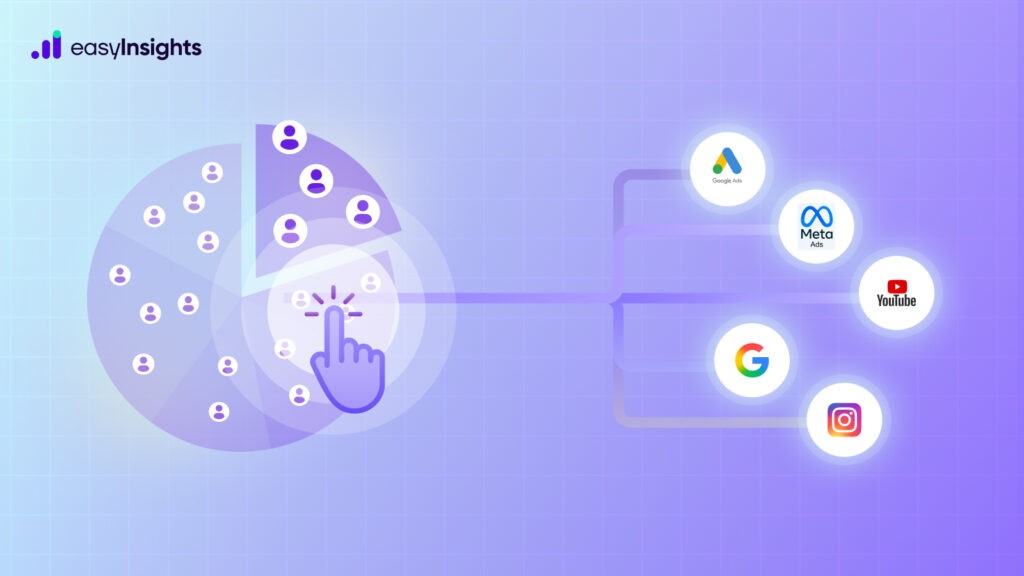
First-party segments can be synced directly to platforms like Meta Ads and Google Ads for advanced campaign targeting. Whether you’re building lookalike audiences, suppressing recent converters, or activating loyalty cohorts, segmentation ensures ad budgets are allocated to high-probability outcomes.
These use cases demonstrate how segmentation bridges intent data with execution allowing brands to scale relevance, efficiency, and ROI across every channel.
Pro Tip: Use First-Party Data for Better Segmentation
In the current privacy-first marketing landscape, relying solely on platform-provided audiences or third-party data is no longer enough. With the deprecation of third-party cookies, stricter data protection regulations (like GDPR and CCPA), and increased browser-level tracking restrictions, marketers face growing limitations on how they identify and target users across the web.
This shift has made first-party data — data collected directly from your users — more valuable than ever. It includes information from your CRM, website analytics, email interactions, purchase history, and app behavior. Because it’s collected with direct user consent and tied to actual engagement, first-party data is more accurate, relevant, and privacy-compliant than any third-party alternative.
To fully capitalize on this data, marketers need more than just collection tools — they need infrastructure that can clean, enrich, segment, and activate that data across marketing platforms in real time.
Tools like EasyInsights.ai enable businesses to automatically sync first-party data from various sources, create high-quality audience segments, and push them to platforms like Meta Ads and Google Ads with precision.
What EasyInsights Does
EasyInsights.ai helps you track and activate high-quality first-party data across your marketing stack.
- First-Party Data Tracking: Our lightweight pixel collects consented user interactions directly from your website, accurately and privacy-compliantly.
- Server-Side Event Delivery: We send these events to ad platforms like Meta and Google via server-side APIs (CAPI, Enhanced Conversions), ensuring better attribution and event match quality.
- CRM & Offline Event Integration: Connect your CRM and offline conversions (like deals won, store visits, call center leads) to ad platforms, enabling revenue-based optimization and closed-loop reporting.
- CEP Activation: Automatically sync CRM segments and events to Customer Engagement Platforms (CEPs) for real-time personalization across email, SMS, push, and more.
EasyInsights turns your data into actionable performance, improving targeting, attribution, and ROI across channels.
Also Read: First-Party Data Activation Platforms
Conclusion
In a world where customer expectations are rising and data privacy is tightening, audience segmentation has become more than just a marketing tactic – it’s a strategic necessity. By understanding and addressing the unique characteristics of each audience group, brands can deliver relevant, personalized experiences that drive stronger engagement, higher conversions, and long-term loyalty.
But segmentation is only as powerful as the data behind it. With third-party data fading and privacy regulations evolving, first-party data has emerged as the most reliable, scalable, and future-proof foundation for audience strategy. Platforms like EasyInsights.ai empower marketers to not only collect and enrich this data but also activate it across channels in real time turning raw insights into measurable performance.
The brands that succeed tomorrow are the ones that invest today in smarter segmentation, cleaner data, and tighter integrations. Start segmenting smarter and let your marketing speak to the audience that truly matters.
Book a Demo with EasyInsights Today!